Fibonacci and His Contributions
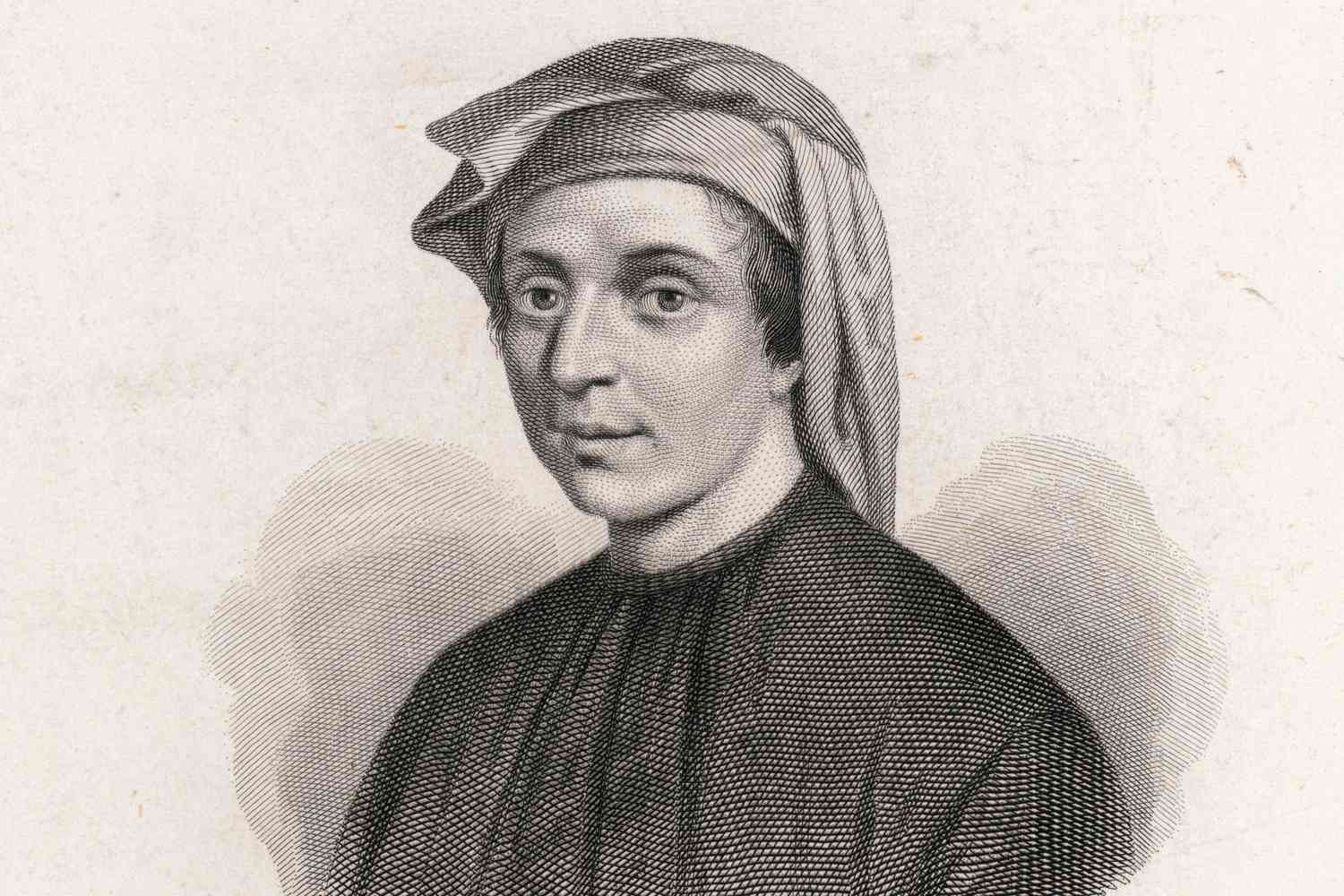
During the medieval period, mathematical development was comparatively low, with much of the innovation taking place in the Islamic world. Islamic mathematicians had advanced algebra, arithmetic, and useful numerical systems that the European world did not widely know. Leonardo de Pisa emerged as a pivotal figure to introduce these revolutionary concepts. Found in his works and enduring mathematical impact, Leonardo de Pisa gave medieval Europe new mathematical thought through both synthesis of his education and his own fascinating work. This paper aims to explore and demonstrate these works and contributions that establish him as the greatest mathematician of his time.
Leonardo de Pisa, also known as Fibonacci or Bigollo (traveler), was born around 1170 in Pisa, Italy, into the Bonacci family. He is the son of Guilielmo, a merchant and customs official who held a trading post in Bugia, where Fibonacci was taught mathematics (O’Connor & Robertson, n.d.). Owing to the nature of Fibonacci’s father’s job, Fibonacci “travelled widely with his father and recognized the enormous advantages of the mathematical systems used in the countries they visited.” Ending his travels in 1200 and returning to Pisa, he then wrote a series of important books, to be discussed further, which played important roles in reviving ancient mathematical skills and his own developments. In Fibonacci’s unique opportunities in traveling and education, these key experiences gave him important mathematical perspectives and allowed him to give insights into his advocacy to better develop mathematics with the adoption of foreign mathematical concepts. This anecdote ultimately shows how mathematical advancement and progress is led by looking at how other people and cultures think about math differently and finding ways to improve one’s own understanding and mental framework.
The Liber Abbaci (The Book of Calculation) of 1202 is one of Fibonacci’s greatest contributions to mathematics as it introduces our modern-day Hindu-Arabic numerals to Europe. Prior to the thirteenth century, “the only Europeans who were aware of the [Hindu-Arabic numeration] system were […] scholars who used it solely to do mathematics” where “traders recorded their numerical data using Roman numerals” with a “fairly elaborate […] fingers procedure” or with a mechanical abacus (Devlin, 2013). With the advent of this general-purpose arithmetic book, it became a major influence in the overall spread of our current numeration and computation systems in Europe as a practical alternative to traders’ Roman numerals, which were overall improvements as it required less symbols when representing larger numbers and allowed for more efficient and flexible computations and methods applied. The Liber Abbaci also covered the methods of computing with these “new” numerals, and even foreign topics like the Chinese remainder problem (Strick, 2014). This book is also widely regarded in its subsequent parts where he then details his most famous contribution: the rabbit problem and its solution, which will be covered shortly. Liber Abbaci reflects Leonardo de Pisa’s major inputs in mathematics in Europe and reveal how he both “packaged” other people’s findings and showcased his own ability to turn a simple scenario into a model with ongoing mathematical significance.
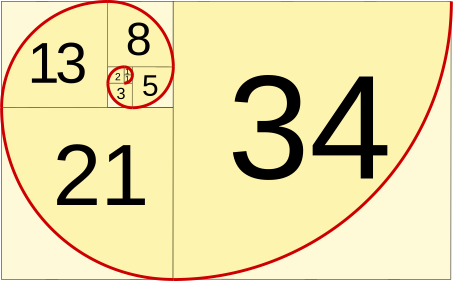
The Fibonacci sequence is a solution to a problem detailed in Liber Abbaci: “How many pairs of rabbits can be produced from that pair in a year if it is supposed that every month each pair begets a new pair which from the second month on becomes productive?” (Scott & Marketos, 2014). The sequence is defined with the base cases F(0) = 0 and F(1) = 1, and the function is defined recursively as F(n) = F(n − 1) + F(n − 2). In other words, each term is the sum of the two preceding terms. The mathematical importance of the Fibonacci sequence can be found in its early use of recursive thinking in a European mathematical context, as well as its applications and appearances in seemingly unlikely scenarios such as nature in pinecones and spirals of shells (Fig. 1). Johannes Kepler “noticed that the ratio of the last two numbers of the sequence (1, 1, 2, 3, 5, 8, 13, 21, 34, …) approaches φ which is called the Golden or divine ratio” where the golden ratio is stated as φ = (1 + √5) / 2, again a prevalent tendency to be a pattern found in especially botanical and zoological realms. Fibonacci was able to innovatively abstract an important concept and pull it into a principle through a simple question, with the impact of the sequence exemplifying why Fibonacci stands out as one of the greatest mathematicians of his time.
Another work, the Liber Quadratorum (The Book of Squares) of 1225, is noted as being the most important work on number theory between Diophantus and Fermat. The book arose from a problem posed to him by Master John of Palermo, a scholar at the court of Holy Roman Emperor Frederick II, who asked Leonardo to “find a square number from which, when five is added or subtracted, always arises a square number” (Katz, 2018, p. 346). Addressing this challenge, Fibonacci first explored general properties of square numbers and sums of square numbers before tackling the specific equations x2 + 5 = y2 and x2 − 5 = z2. In doing so, he introduced the concept of congruous numbers, numbers of the form ab(a + b)(a − b) when a + b is even, and 4ab(a + b)(a − b) when a + b is odd, showing that only congruous numbers yield rational solutions to such equations. This method enabled him to prove that the solution would not be an integer or a result of a square root, then actually solve it. Similarly in his book Flos in which he solves a specific cubic equation (Strick, 2014), this approach was distinct from earlier Islamic mathematicians and shows clear mastery of the mathematics encountered during his travels. This mastery, paired with significant advances, reinforces his reputation as a rigorous and strong mathematician.
Leonardo “Fibonacci” de Pisa contributed greatly to his discipline in such a way that his genius is reflected through his success in bridging the gap between the Islamic and European cultures in the medieval period. His work Liber Abbaci that introduced Hindu-Arabic Numerals and delved into the Fibonacci sequence, and the number theory Liber Quadratorum and Flos gave consistently built fundamental principles. Through examining his life and achievements, it remains clear that Fibonacci was not merely a transmitter of knowledge between cultures, but a creative, intelligent mathematician that modern mathematics owe a great debt to for his continuous inspiration and influence.
References #
- Devlin, K. (2013). The man of numbers: Fibonacci’s arithmetic revolution. Scientific American. https://www.scientificamerican.com/article/the-man-of-numbers-fibona/
- Katz, V. J. (2018). A history of mathematics: An introduction (3rd ed.). Pearson.
- O’Connor, J. J., & Robertson, E. F. (n.d.). Leonardo Pisano Fibonacci. MacTutor History of Mathematics Archive. University of St Andrews. https://mathshistory.st-andrews.ac.uk/Biographies/Fibonacci/
- Scott, T. C., & Marketos, P. (2014). On the origin of the Fibonacci sequence. MacTutor History of Mathematics Archive. https://mathshistory.st-andrews.ac.uk/Publications/fibonacci.pdf
- Strick, H. K. (2014). Leonardo of Pisa, also known as Fibonacci. European Mathematical Society. https://mathshistory.st-andrews.ac.uk/Strick/fibonacci.pdf